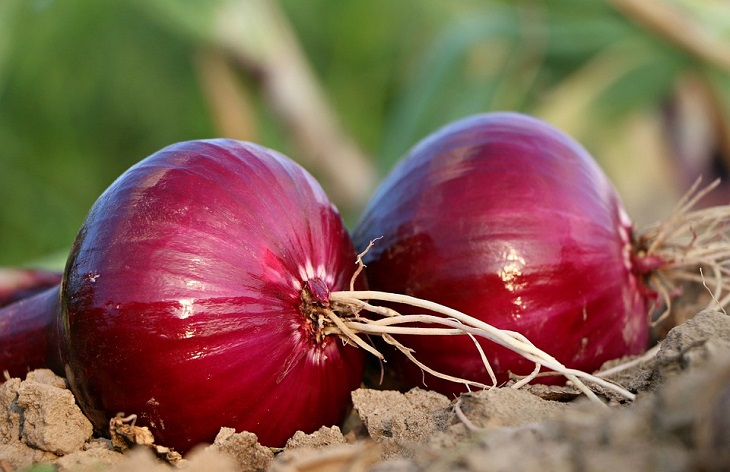

Growing onions is only half the battle. Ask any farmer in Kitui, Makueni or Machakos, and they’ll tell you the real headache starts once the crop is ready: where to sell it, how to get a fair price, and how to make sure you actually get paid.
Nairobi, as Kenya’s biggest consumption hub, is the obvious target. Wholesalers, retailers, hotels, restaurants, institutions- the demand is there. The trouble is getting to it without losing out along the way.
Market players and agricultural experts keep coming back to the same issue as farmers simply don’t have enough information.
Without knowing what onions are actually selling for in the city, a farmer can easily hand over their harvest to a broker at a rock-bottom farm-gate price, only to find out weeks later that the same onions were fetching double or triple that in Nairobi.
This is exactly the gap that Kenya’s Agricultural Market Information System (KAMIS) was set up to close, giving farmers real numbers on prices and market conditions so they’re not walking into negotiations blind.
KALRO’s Digital Agriculture Platform does something similar, offering both current and historical price trends that farmers can use to plan ahead rather than sell in a panic.
Start looking for a buyer before you even harvest
Too many farmers wait until the onions are out of the ground to start thinking about who’ll buy them. That’s backwards. The smarter approach is to line up buyers while the crop is still in the field.
Worth reaching out to wholesale traders, grocery shops and supermarkets, hotels and restaurants, Schools and colleges, food processors, catering companies, fresh-produce distributors, online grocery businesses and bulk-buying vegetable vendors
If you’re sitting on, say, five tonnes of onions, don’t put all your eggs in one broker’s basket. Call ten buyers. Call twenty. Ask what they need, what quality they’re after, where delivery should happen, how they pay, and what price they’re offering right now. Then compare.
Don’t just ask “how much are you buying?” That one question isn’t enough. Before agreeing to anything, farmers should be asking:
- How much quantity do you actually need?
- What size and grade of onion do you accept?
- Who’s covering transport?
- Where does delivery need to happen?
- When will payment land?
- How will the onions be weighed?
- What happens to onions that get rejected?
- Are there any commissions or hidden deductions?
Nail these down before the onions ever leave the farm. It’s a lot easier to agree on terms upfront than to argue about them after the truck has already left.
- Know the Nairobi price before you negotiate anything
It is good to Know the Nairobi price before you negotiate anything. Walking into a negotiation without knowing the going rate is one of the costliest mistakes a farmer can make.
Prices shift depending on whether you’re looking at farm-gate, wholesale or retail, and on top of that, there’s transport, loading, offloading, market fees and the inevitable losses along the way.
There’s been plenty of reporting out of Nairobi’s Marikiti market showing just how often farmers arrive expecting one price and leave with something far less, which is exactly why doing the homework beforehand matters so much.
Work out your bottom line before you go. If it costs Sh30,000 to truck a consignment to Nairobi, that figure needs to be baked into whether a buyer’s offer is even worth accepting.
- Watch out for fake buyers
Be careful with anyone who shows up claiming to represent a supermarket, hotel or big trading company. Before handing over a single onion, verify who they actually are, get their full business name, physical address, phone contacts and payment details.
For bigger deals, it’s worth the trip to actually visit the buyer’s premises first. And treat anyone asking for upfront money, for “registration,” transport, permits, or vague “processing fees”, with serious suspicion.
Verbal promises aren’t worth much either. Get something in writing: a purchase order, an invoice, an agreement, anything that spells out the quantity, price, delivery point, deductions and payment terms.
Never hand over your whole harvest on credit to a stranger. Payment terms deserve extra caution. Handing a large consignment to an unfamiliar buyer on a promise that payment will follow “in a few weeks” is a gamble many farmers come to regret.
Where possible, push for payment on delivery, or agree on some form of trusted arrangement. With a new buyer, it’s often wiser to start small, build trust with a modest delivery before committing a full harvest. And keep everything: delivery notes, weighing slips, invoices, receipts, texts, payment confirmations. All of it.
- There’s strength in numbers
There’s strength in numbers, one way to loosen a broker’s grip is for farmers to team up. A single farmer trying to move 300 kilograms doesn’t have much leverage.
Twenty farmers pooling their onions together, however, suddenly look a lot more attractive to hotels, institutions and distributors who need steady, reliable volumes. Group marketing also spreads out transport costs and puts more bargaining power in farmers’ hands.
- Quality keeps buyers coming back
Quality keeps buyers coming back, landing a buyer once isn’t the end goal, keeping them is. That means onions that are properly sorted, cleaned, graded and packaged, batch after batch. Set aside anything damaged, rotten or undersized.
Buyers who know they can count on consistent quality are far more likely to keep coming back instead of shopping around every season.
Middlemen aren’t inherently the enemy, they aggregate produce, arrange transport and open doors to buyers a farmer might never reach alone. The real problem is when a farmer has zero market information and ends up entirely dependent on a broker to set the price.
A farmer who knows what onions are going for in Nairobi, understands the real cost of getting them there, and has other buyers to fall back on is in a far stronger position, broker or no broker. The point isn’t to eliminate every middleman, but to strip out the unnecessary ones and make sure whoever stays in the chain is actually earning their cut.
For an onion farmer in Ukambani, market planning should start almost as early as planting does. Before harvest, know the prices, know the buyers, know the transport costs, know the payment terms.
Don’t rush to sell just because the onions are out of the ground. That patience, backed by solid market information, is often the difference between selling at a loss and walking away with a real profit.
So, the real question isn’t simply “who will buy my onions?” It’s: who’s offering a fair price, what will it cost to reach them, and how do I make sure I actually get paid?
Related Content: Onion Prices Remain High Across Kenyan Markets Amid Supply Pressures