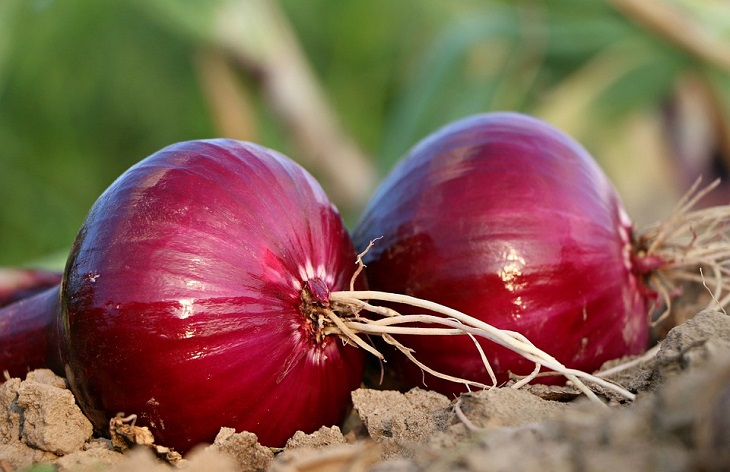

Kenyan households continue to feel the pinch at the vegetable stall, with onions holding onto some of the steepest price gains of any staple in recent months.
A kilogram of red dry onions in major Nairobi markets such as Wakulima, Gikomba and Ruai has been trading in the range of roughly 120 shillings to 180 shillings, depending on quality, size and source, marking a sharp jump from the 60 shillings to 80 shillings range recorded only a couple of months earlier during periods of good local supply.
Onion farming in Kenya is dominated by smallholders in areas such as Kieni, Naivasha, Kajiado and Nyeri, most of whom rely on rain-fed cultivation.
Unpredictable rainfall has repeatedly disrupted harvests; heavy rains at harvest time have caused bulbs to absorb excess moisture, making them difficult to dry and prone to rotting before they reach market.
Reliance on imports. Roughly half of Kenya’s onion supply has historically come from Tanzania, with additional volumes from India, South Africa, Uganda and, during past shortages, as far afield as Ethiopia.
When cross-border supply tightens, whether from Tanzania’s own harvest cycles or logistical bottlenecks, Kenyan prices respond quickly.
Traders note that onions bought from farmers at around Sh65–Sh100 per kilogram can cost Sh100–Sh150 by the time they reach Nairobi markets once transport, handling and trader margins are added.
Many consumers and retailers favour Tanzanian onions because they are well-cured and can be stored for months without spoiling, unlike some locally grown varieties with higher moisture content, a preference that keeps demand for imported stock, and its price, elevated even when local onions are available.
Onions are one of several vegetables that have weighed on Kenya’s food basket over the past couple of years.
The Kenya National Bureau of Statistics (KNBS) has repeatedly flagged bulb onions and leeks as among the more volatile items in its Consumer Price Index, with month-on-month swings of 7–11 percent not uncommon during supply crunches.
More broadly, KNBS data for mid-2026 shows food and transport costs pushing headline annual inflation up to 6.7 percent, from 5.6 percent the previous month, with vegetables such as tomatoes, cabbage and spinach also recording notable increases, a sign that onions’ troubles are part of a wider pattern of vegetable price volatility rather than an isolated case.
The price swings have changed shopping habits at the household level. Some consumers have scaled back on onions altogether or switched to buying smaller bulbs piece by piece rather than by the kilogram.
Grocers say they’ve had to adjust how they sell, breaking large onions into smaller portions to keep them within reach of tighter household budgets, while some kiosk operators have simply stopped stocking onions when margins get too thin to justify the risk.
Traders remain hopeful that prices will ease once local harvests, which typically peak between January and March, and again between August and October depending on the region, come fully online, alongside steadier import flows from Tanzania.
Related Content: Why Onions From Tanzania Still Remain Popular In Kenya 2022