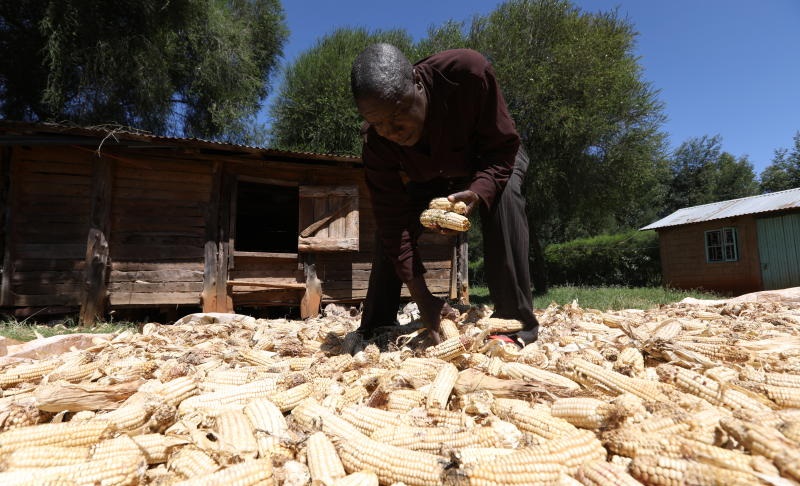

Despite the ongoing harvest season in most parts of the country, the market prices for dry maize have not changed. A 90-kilogram bag is going at 4000 to 4500shillings across the country.
According to market data, fresh green maize is also available in the market where a 115-kilogram bag is as follows across the country: 6500 shillings in Kisumu, 4000 shillings in Busia, in Nairobi, 6000 in Kitale, 4500 in Nakuru and 3000 shillings in Eldoret.
While the cost of raw maize has remained relatively high in many areas, consumers in parts of western Kenya are beginning to enjoy lower maize flour prices as harvesting gains momentum.
Farmers from the Western region have started harvesting, the 2kg container of maize which was retailing at 150 shillings three weeks ago is now selling at between 120 shillings and 100 shillings in most parts of the region.
In Kakamega, Bungoma, and Busia counties, the prices of maize have already drastically dropped. The harvesting season has already kicked off in the said regions. In Kakamega, a 90-kilogram bag of maize is retailing at 4000 shillings.
In Bungoma, the price of a 90-kilogram bag of maize has also reduced dramatically. A 2-kilogram container of maize is retailing at 110 to 130 shillings from 150 shillings.
The prices are expected to drop in other parts of the county, once farmers start harvesting the crop in the next couple of weeks.
The market prices for finger millet have gone up in the past few weeks driven by a decrease in the production of the cereal.
A 90-kilogram bag was retailing at 8,200 shillings in Eldoret, then in Nairobi, the same quantity is being sold at 9000 shillings, 8,000 shillings in Kisumu, 8,900 shillings in Mombasa, 7,800 shillings in Busia, 8,300 shillings in Kitale and Nakuru.
For many Kenyan households, the cost of maize remains one of the clearest indicators of the country’s economic situation. The price of maize flour, particularly the widely purchased two-kilogram packet, directly affects household budgets because it is used to prepare ugali, the country’s most common staple meal.
Whenever maize prices remain elevated, consumers often fear potential shortages and higher living costs. Those concerns are compounded by persistently high prices of other essential household commodities, including cooking oil and bar soap, leaving many families under continued financial pressure despite the onset of the harvest season.
Related Content: Prices Of Maize And Wheat Flour Across Major Supermarkets In Kenya