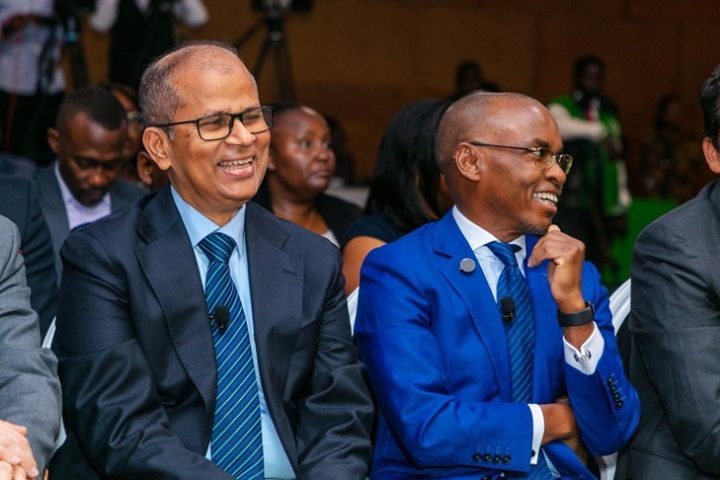

When Safaricom launched its 15th Sustainable Business Report in Nairobi on 27 October 2026, under the theme Rooted in Impact, Connecting the Future, most of the early coverage went straight to the big numbers: the trillions of shillings in value created for Kenyan society, the jobs supported, the foundation programmes reaching every county.
Those figures matter. But read the report with an engineer’s eye and a second story comes into focus. It is the story of a company quietly rebuilding itself from the ground up, moving from a mobile network operator into what it calls Africa’s leading purpose-led technology company.
Safaricom has been open about the destination. “Accelerating the transition to a TechCo” sits as one of the four pillars of its strategy. What the latest report adds is evidence of the machinery behind that ambition: the infrastructure, the privacy engineering and the AI governance that have to be in place before a telco can credibly call itself a tech company.
6,000 transactions a second, seldom down
For most Kenyans, M-PESA is simply there. A fare is paid, school fees are sent, a shop is settled, and the confirmation SMS lands within seconds. That ordinariness is the achievement. According to the report, M-PESA can now process up to 6,000 transactions per second while running at 99.999% availability.
That last figure, known in the industry as “five nines,” is harder to reach than it sounds. It allows for roughly five minutes of unplanned downtime across an entire year. Getting there is not about one heroic upgrade. It means duplicating critical systems so that no single failure takes the platform down, testing failover until it is boring, and planning capacity around the moments when the whole country seems to transact at once: salary days at the end of the month, the January school-fees rush, the run-up to Christmas. Every one of those peaks is a stress test that the engineering teams have to pass without customers ever noticing.
For a platform that carries a large share of Kenya’s economic activity, reliability is not a technical vanity metric. It is the foundation of everything else Safaricom wants to build on top of it.
The Privacy
If reliability is the first promise of a payments platform, privacy is the second. One of the most practical changes highlighted in the report is the rollout of full person-to-person name masking to more than 40 million subscribers.
The problem it solves is a familiar one. For years, sending money revealed the recipient’s full registered name. That was convenient for confirming you had the right person, but it also handed fraudsters a tool. A full name attached to a phone number is exactly the kind of detail a scammer uses to sound credible on a call. Masking gives the sender enough to confirm the transaction without exposing more personal information than the moment requires.
It is a small detail on a screen, but it reflects a larger design principle: collect and show only what is needed. That principle matters more as threats grow. The same report notes that Safaricom detected and monitored around 1.25 billion intrusion attempts during the financial year. Against that backdrop, every piece of data that is not exposed is one less thing an attacker can use.
The Digital Economy
No tech company can outrun its infrastructure. Safaricom’s network now stretches across 21,000 kilometres of fibre and 1,879 5G sites, and that physical footprint is what turns strategy into something people can use.
Fibre is the backbone that carries traffic between cities, data centres and homes. 5G is the layer that brings high-speed, low-latency connectivity to the edge, whether that is a household getting fixed wireless broadband without waiting for a cable, a hospital moving large medical images, a factory connecting sensors on its floor, or a young creator uploading video from a town that once struggled with a stable 3G signal. Each new site extends the reach of cloud services, digital learning and e-commerce to people and businesses who were previously on the wrong side of the speed gap.
For Safaricom, the network is no longer just a way to sell airtime and data bundles. It is the platform on which an entire ecosystem of digital services, its own and its partners’, is expected to run.
70 AI models, and a rulebook to match
The most forward-looking proof point in the report is the deployment of more than 70 AI models across the business. In a company of Safaricom’s scale, models like these typically help spot suspicious transactions, predict network faults before they happen, and make customer service faster and more personal.
What stands out is that Safaricom has paired this rollout with a Responsible AI Governance Policy. That pairing is the point. AI that touches people’s money and personal data can amplify bias, make opaque decisions or be misused if it is left ungoverned. A formal policy sets expectations for how models are approved, monitored and held accountable, and it gives customers, regulators and partners something concrete to hold the company to.
This year’s report is also Safaricom’s first prepared under a double materiality framework, which looks both at the company’s impact on society and at how risks such as fraud and cyber security could affect the long-term resilience of the business. Responsible AI fits squarely inside that lens: it is both an ethical commitment and a business safeguard.
Trust is the real product
Put the pieces side by side and a pattern emerges. Five-nines reliability, name masking, a fibre and 5G backbone, and governed AI are not separate initiatives. Together they describe a company that understands what a technology business in Africa actually sells. The services are the visible part. The thing customers are really buying is confidence that their money will move, their data will be protected and the systems making decisions about them are being held to account.
Safaricom’s transition to a TechCo will be judged over the rest of this decade. If the 2026 report is any guide, the company has decided that the fastest way to get there is not to move fast and break things, but to build carefully and earn trust at every layer of the stack.
Related Content: KSh 1.247 Trillion, One Kenyan at a Time: Inside Safaricom’s Economic and Social Impact Engine