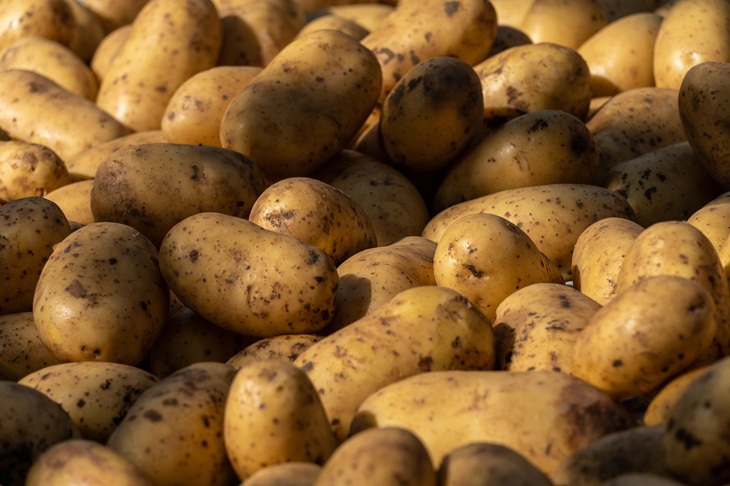

A standard 50-kilogram bag of Irish potatoes is currently going for anywhere between Ksh2,150 and Ksh3,250 across the country, a gap of more than a thousand shillings that largely comes down to region and variety.
The figures, drawn from the National Potato Council of Kenya (NPCK), show retail prices per kilogram sitting anywhere from Ksh43 in parts of Meru to Ksh65 in Nakuru.
Nakuru currently holds the top spot for the most expensive potatoes, with a kilo fetching Ksh65 and pushing bag prices close to Ksh3,250. Mombasa trails just behind at Ksh61 a kilo, or about Ksh3,050 for a full bag.
In Nairobi, the prices swing between Ksh51 and Ksh64 per kilo depending on the market and the trader. A 50kg bag could set you back anywhere from Ksh2,550 to Ksh3,200, a reminder that shopping around still pays off in this city.
Kisumu isn’t too different, with kilo prices of Ksh57 to Ksh63 translating to bags worth Ksh2,850 to Ksh3,150. Eldoret comes in a bit cheaper, with potatoes retailing at Ksh54 a kilo, or roughly Ksh2,700 a bag.
For the best deals right now, head to Meru or Isiolo. Both counties lean heavily on the Shangi variety, which continues to dominate Kenya’s potato trade.
Meru’s Shangi is going for Ksh43 to Ksh45 a kilo, putting bags at around Ksh2,150 to Ksh2,250, the cheapest in the country.
Isiolo is not far off either, with Shangi priced between Ksh52 and Ksh56 a kilo and the Unica variety slightly cheaper at Ksh49, landing bag prices somewhere between Ksh2,450 and Ksh2,800.
Traders attribute the relatively steady pricing to consistent supply from the country’s major growing counties, Nyandarua, Nakuru and Elgeyo Marakwet, which together account for most of the potatoes reaching urban markets.
But retail prices don’t always tell the whole story. Farmers on the ground often get a raw deal compared to what their potatoes eventually fetch in town, with brokers repeatedly accused of underpaying growers even when demand in the markets is strong
Potatoes are Kenya’s second most important food staple after maize, grown by an estimated 800,000 smallholder farmers and supporting roughly 2.7 million people across the value chain, from the growers themselves to transporters, brokers and market traders.
Altogether, the sector is thought to contribute more than Ksh50 billion annually to the economy.
Industry watchers warn that any hiccup in the rains or a sudden jump in transport costs could send bag prices climbing again, something that’s happened often enough in Kenya’s potato market that few are willing to bet on today’s numbers staying put for long.
Related Content: Healthy Eating And Other Secrets To A Strong Immune System