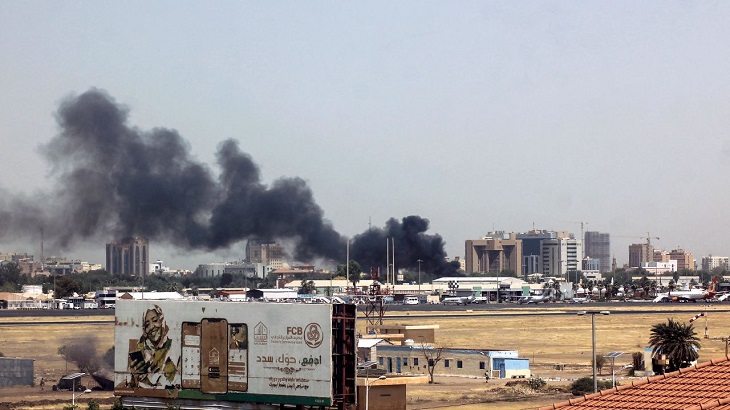

Sudan today stands at one of the most fragile moments in its modern history. The country has been torn apart by a brutal civil war between the Sudanese Armed Forces (SAF) and the paramilitary Rapid Support Forces (RSF), a conflict that has devastated infrastructure, displaced millions, and left the state struggling to function.
Against this backdrop, statements by figures aligned with the Sudanese army expressing readiness to support Iran in a potential confrontation with the United States and Israel represent a deeply troubling development.
Such rhetoric — and any policy that might follow it- risks dragging an already shattered country into a geopolitical confrontation far beyond its borders.
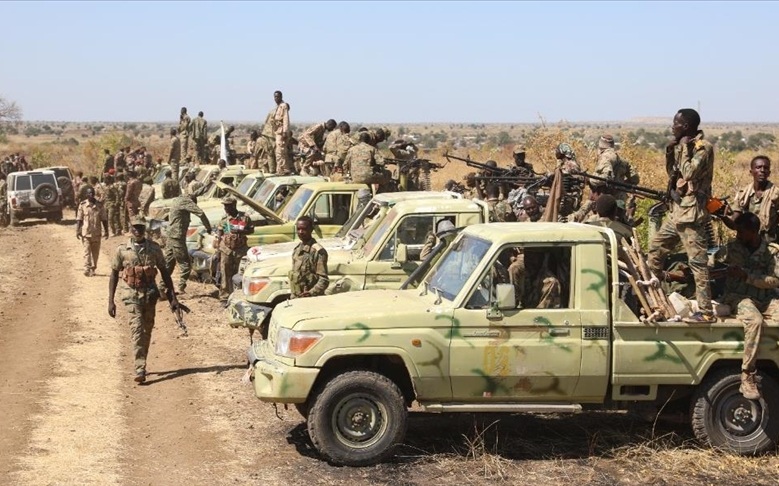
Recent reports indicate that fighters associated with Sudan’s Islamist movement and aligned with the army have openly declared support for Iran and even threatened to deploy Sudanese fighters should a ground war erupt between Iran, the United States, and Israel. In one widely circulated video, a commander declared that Sudanese “mujahideen” were ready to send battalions to fight alongside Tehran if such a conflict escalated.
Even though Sudan’s military leadership later distanced itself from the remarks, the mere existence of such statements exposes the dangerous intersection of Sudan’s domestic conflict with wider Middle Eastern rivalries.
A Country Already at War With Itself
Sudan is not a stable nation contemplating foreign military engagement from a position of strength. It is a fractured state fighting for survival.
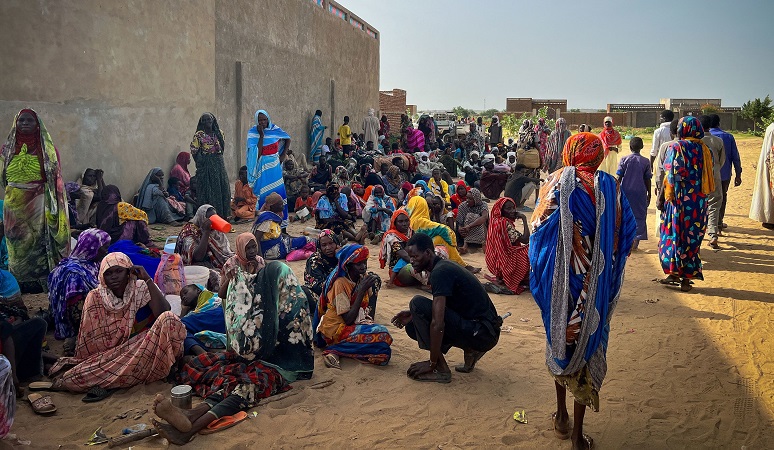
Since 2023, the Sudanese Armed Forces and the RSF have been locked in a catastrophic civil war that has produced one of the world’s worst humanitarian crises. Millions of Sudanese have been displaced and large parts of the country have collapsed into lawlessness and famine-like conditions.
In such a situation, even symbolic gestures toward foreign conflicts are reckless.
A state engaged in an existential internal struggle cannot afford the luxury of ideological foreign adventures. Military institutions that should be focused on restoring internal stability instead risk diluting their strategic focus by aligning themselves with distant geopolitical conflicts.
The result is a dangerous distraction from Sudan’s most urgent priority: ending the war at home.
Risk of Turning Sudan Into a Proxy Battlefield
The second danger lies in the geopolitics of the Middle East.
The confrontation between Iran on one side and the United States and Israel on the other is not simply a bilateral dispute. It is a complex regional rivalry involving multiple alliances and proxy networks stretching from Lebanon and Syria to Yemen and the Red Sea.
Sudan’s renewed ties with Tehran since 2023 — reportedly including military cooperation and drone supplies — already place the country within this strategic web.
By publicly aligning with Iran, Sudan risks transforming itself from a struggling state into yet another arena for proxy competition.
That would be catastrophic.
Countries such as Lebanon, Syria, and Yemen illustrate the consequences of becoming battlegrounds for larger geopolitical conflicts. Their internal political crises became far more difficult to resolve once external actors began competing for influence through local factions.
Sudan, with its strategic location along the Red Sea and near the Horn of Africa, would become an attractive staging ground for such rivalries.
Alienating the Arab World
Another risk is diplomatic isolation.
Iran’s missile strikes in the Gulf have already triggered strong reactions across the Arab world, with several Gulf states condemning the attacks and warning of regional escalation.
If Sudan appears to side with Tehran against other Arab nations, it risks undermining relationships with key regional partners — including countries that play crucial roles in Sudan’s humanitarian aid, economic assistance, and diplomatic mediation efforts.
Sudan cannot afford to alienate these partners.
Reconstruction, humanitarian relief, and future economic recovery will depend heavily on international and regional support. Aligning with one side of a volatile regional conflict risks closing doors that Sudan will desperately need open once the war ends.
The Militarization of Ideology
Perhaps the most worrying aspect of the rhetoric supporting Iran is the ideological tone that accompanies it.
Statements invoking religious solidarity and “jihad” echo the language of past Islamist militancy that once shaped Sudan’s political trajectory during the era of former President Omar al-Bashir.
Sudan has spent years attempting to move beyond that legacy and reintegrate into the international community.
Allowing ideological factions within the military sphere to shape foreign policy risks dragging the country back into the isolation and sanctions that defined that era.
Sudan’s Real Battle Is at Home
Sudan’s real challenge is not in Tehran, Tel Aviv, or Washington.
It is in Khartoum, Darfur, and across the devastated communities where Sudanese civilians continue to suffer the consequences of an unresolved civil war.
For Sudan’s military leadership, the strategic priority should be restoring national unity, negotiating an end to the conflict, and rebuilding state institutions.
Engaging in — or even rhetorically supporting — distant geopolitical wars is not just irresponsible.
It is dangerous.
For a country already fighting within itself, opening the door to external conflicts could turn Sudan from a victim of instability into a catalyst for wider regional turmoil.
And Sudan, perhaps more than any country today, cannot afford that gamble.