
Think about the last time you paid for something without thinking about it. You probably didn’t. The payment went through, the receipt arrived, and you got on with your day. That ease is the product of a great deal of invisible work, and it only exists because people believe their money is safe.
We tend to talk about digital payments in terms of speed and convenience. Tap, scan, done. But convenience is the reward for trust, not the cause of it. Nobody keeps using a payment method that has charged them twice, lost their money in transit, or exposed their details to a stranger.
Kenyans understand this better than most. The country built one of the world’s best-known mobile money habits because people came to believe that a phone could hold and move their money reliably. That belief took years to earn and could be lost quickly. Every new way of paying, whether a wallet, a card or a QR code, has to earn that confidence again.
What happens behind the checkout
When you pay by card, the transaction travels through several steps in well under a second. Your card details are encrypted so that the information passing between your device, the merchant and the bank is unreadable to anyone intercepting it. In many cases the actual card number is replaced with a one-time token, so the merchant never holds the real thing.
At the same time, fraud monitoring is working in the background. Systems analyze patterns in real time: where the card is being used, how the amount compares with your normal spending, whether the behavior looks like you. Most of the time you never see any of this. Occasionally you get a text asking whether a purchase was yours, which is the system doing its job.
What matters most is consistency. The same standard of protection should apply whether you’re paying at a supermarket in Westlands, a kiosk in Kawangware, or an app on your phone at midnight. A rider shouldn’t get weaker security because the trip is short or the amount is small. Visa, as the network behind many of these card payments, builds its approach around that principle, and it is one reason platforms can offer card payment to people who would never otherwise try it. Globally, Visa identified nearly USD 1 billion in scam-related activity between July and December 2025 (Visa Spring 2026 Biannual Threats Report). Closer to home, 37% of Kenyans have experienced a financial scam in the past 12 months (Visa Stay Secure Study 2026)
The people on the other side of the payment
It is easy to think of payment security as a consumer issue, but the people most affected are often the ones receiving the money.
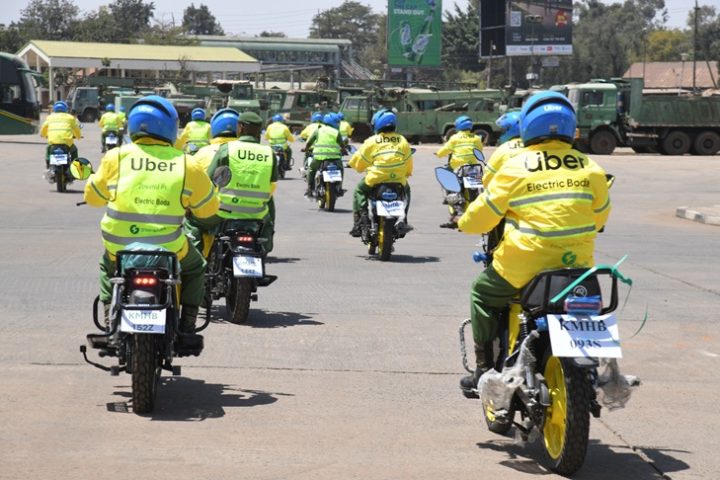
Consider a driver working long hours on a ride-hailing platform. For them, a payment isn’t an abstraction. It is fuel, rent, school fees and loan repayments. If earnings arrive late or inaccurately, the damage is immediate. The same goes for the restaurant owner who has prepared forty orders through a delivery app, or the small merchant who needs the day’s takings to restock tomorrow.
Cash has real advantages, and I don’t dismiss them. But it also brings risks that rarely get discussed: the driver carrying a day’s earnings, disputes over change, no clean record of what was earned. A digital payment, handled properly, gives a clear and timely record. Platforms like Uber are a useful example here, because they bring together riders, drivers and merchants who all need the money to move correctly. Visa’s collaboration with platforms of this kind illustrates what that standard looks like in practice: the same protections for the person paying and the person being paid.
That record also has a second use. Steady, documented income is what helps a driver or a small business owner show a lender they are a reasonable risk. For many people in the informal economy, that is where financial inclusion actually begins.
Kenya’s move towards cashless commerce
Kenya is well placed for this shift. Mobile money has already taught millions of people to treat their phone as a wallet. Cards and other digital methods are now building on that foundation, particularly in cities where commuting, food delivery and online shopping are part of daily life.
For small businesses the payoff is practical. A shop that accepts digital payments can serve customers who carry little cash. It can reduce the time spent counting and banking notes, and it can build a transaction history that supports applications for credit. The wider economy benefits too, as more activity moves into formal, traceable channels, which helps with planning, taxation and investment.
None of this happens automatically. A small trader will adopt digital payments only if they are cheap to accept, simple to use and dependable on a bad network day. Customers need to know that if something goes wrong, there is a clear route to getting it fixed. Regulators, banks, networks and platforms all share responsibility for getting this right. The Stay Secure Study shows how widely that responsibility is felt: 48% of Kenyans believe government authorities and regulators should be primarily responsible for protecting consumers from fraud, followed by payment providers at 36% (Visa Stay Secure Study 2026).
Trust is built in small moments
If I could leave one thought with business owners, policymakers and anyone building a payment product, it would be this. People don’t judge a payment system by its technology. They judge it by whether they were paid correctly, whether their money was safe, and whether someone fixed it when it wasn’t.
Each smooth ride, each prompt payout and each fraud attempt quietly blocked adds to a store of confidence. That store is what allows a city to change how it moves and trades. The cashless shift in Kenya will be won or lost on that confidence, one ordinary transaction at a time.
Related Content: Nearly 6 in 10 Uber And Bolt Drivers Expect Demand To Drop If Fares Rise