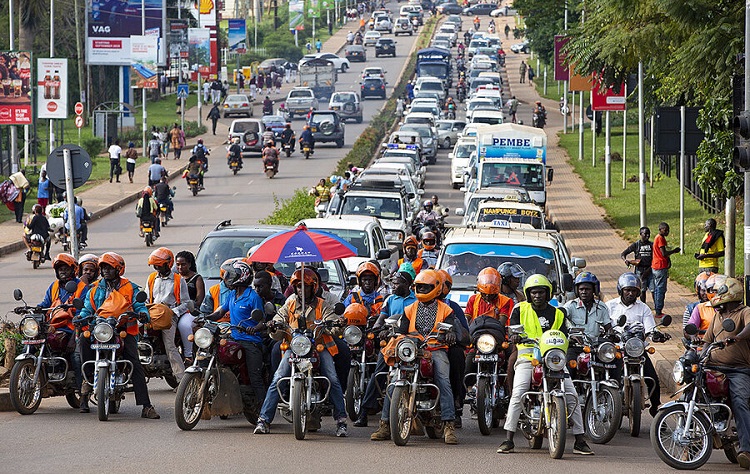
For many Kenyans, owning a motorcycle is not about having a shiny new machine parked outside the house. It is about income.
It can mean delivering goods across town, taking passengers from one estate to another, getting to a farm that is poorly served by public transport or simply having an asset that can generate money every day.
That is why the latest decision by Watu Credit to reduce the deposit required for motorcycle financing deserves more attention than the usual corporate announcement.
From October 1, new customers can finance eligible motorcycles with a 27 per cent deposit, down from 35 per cent. Returning customers will pay 24 per cent, down from 30 per cent.
On paper, the difference may look like a few percentage points. In the real world, however, those percentage points can determine whether someone gets a motorcycle now or spends several more months trying to raise the money.
Consider a motorcycle costing Sh150,000. A first-time customer previously needed Sh52,500 upfront. Under the new arrangement, that falls to Sh40,500. That is Sh12,000 that the rider does not have to raise before getting on the road.
For a returning customer, the deposit falls from Sh45,000 to Sh36,000, leaving Sh9,000 in their pocket. On a Sh200,000 motorcycle, the saving rises to Sh16,000 for a new customer and Sh12,000 for a returning one.
For someone with a regular salary, these may not sound like enormous amounts. For a young rider trying to enter the boda boda business, a small trader or someone relying on daily income, Sh12,000 or Sh16,000 can be the difference between a plan and an opportunity.
And that is where the importance of the change lies.
The motorcycle is often not the end product. It is the tool that is expected to produce the income needed to pay the loan, support a family and possibly grow a small business.
Watu itself argues that a lower entry point can allow riders to start working sooner and retain more of their early earnings rather than spending a longer period saving for a larger deposit.
That logic makes sense in an economy where access to productive assets remains a major challenge.
But there is another side to this conversation that consumers should not ignore.
A lower deposit makes financing easier to enter, but it does not make the motorcycle cheaper.
The amount not paid upfront eventually becomes part of the financing equation. A prospective rider therefore needs to look beyond the deposit and understand the total amount payable, the repayment period, the monthly instalment, insurance and other associated costs before deciding whether the deal works for them.
That is particularly important because the motorcycle is expected to generate enough income to sustain the repayment.
In other words, the right question is not simply: How little do I need to pay today?
It is: Can this motorcycle realistically earn enough to cover its financing costs and still leave me with a worthwhile income?
That distinction matters.
The timing of Watu’s move is also interesting. Kenya registered 241,763 motorcycles and auto-cycles in 2025, more than double the 118,308 registered in 2024, according to the Economic Survey 2026 cited in the draft.
The numbers suggest that two-wheel transport and the businesses built around it remain an important part of the economy.
Lowering the entry cost could therefore bring more people into that market. It could help an aspiring rider acquire an income-generating asset earlier, while giving existing customers with a good repayment history an easier route to another motorcycle.
The offer initially covers Boxer, TVS, Honda and Haojin petrol motorcycles and is available through Watu branches, local dealers and agents.
But for me, the bigger issue is what happens after the keys are handed over.
Affordable financing should not only be measured by how easy it is to get the asset. It should also be measured by whether the person who gets it can sustainably make the repayments and improve their financial position.
That means riders need clear information, realistic repayment plans and a proper understanding of the obligations attached to the loan.
Still, reducing the deposit is a meaningful step.
For someone who has spent months trying to raise Sh52,500, being told they now need Sh40,500 changes the conversation. It brings ownership closer. More importantly, it potentially brings earning capacity closer.
The motorcycle may only be two wheels and an engine. For the person behind the handlebars, however, it can represent a job, a business and a way of building a livelihood.
That is why the real value of a lower deposit should not be measured only in percentage points. It should be measured by whether more Kenyans can turn an income-generating asset into a sustainable source of income.
Related Content: Over 2,000 EVs And 1.4M Smartphones Financed – Watu