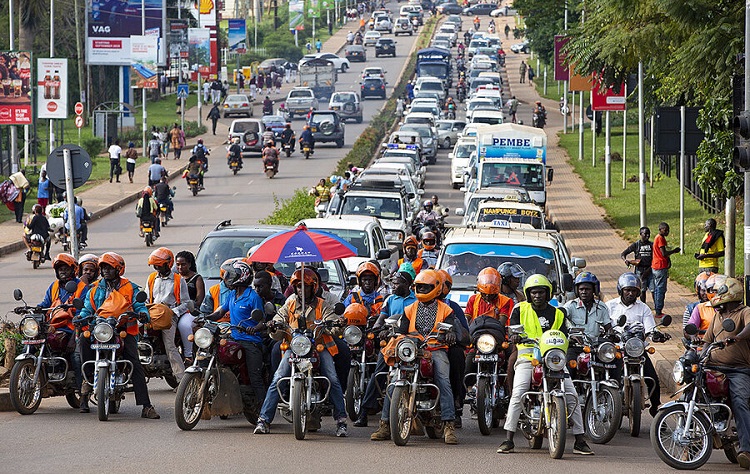

Most conversations about boda boda financing start with the bike. I think they should start with the rider’s week, because that is where the loan gets repaid.
That is also where MOGO Kenya’s business sits. MOGO is an asset financier that lends against the tools small entrepreneurs earn a living with: boda bodas, tuk-tuks, cars and smartphones. Its Kenyan lending is aimed at a sector that, by one Viffa Consult estimate, generates about KES 660 billion a year, roughly 4.4 percent of GDP, and employs more than 2.5 million people. MOGO has said that more and more riders now want to own their motorcycles rather than rent them. That shift is why the arithmetic below matters.
A motorcycle on finance is a small business with one employee, one asset and a payment due on a schedule that doesn’t care whether it rained. Whether that business works comes down to arithmetic that anyone can do on the back of a receipt. So, let’s do it.
Meet Kevin. He works in a busy Nairobi neighbourhood and rides six days a week. The figures below are illustrative assumptions for the sake of the exercise, not MOGO Kenya’s pricing or a quote for any product.
- Bike: a 150cc motorcycle with a cash price of KES 165,000
- Deposit: KES 35,000, which is close to the minimum down payment MOGO has cited for a popular 150cc petrol bike
- Repayment: KES 400 a day over 18 months, which comes to KES 2,400 across his six working days, or roughly KES 187,000 in total
- Working week: six days, one rest day
- Fuel: about 4 litres a day at KES 190 per litre, which is KES 760 if he rides hard, but let’s say he averages KES 650 on a normal day
- Maintenance reserve: KES 250 a day for oil changes, tyres, chain and sprocket, brake pads and the occasional puncture
- Other costs: KES 100 a day for insurance, licence and stage or association fees
Anyone can argue with these numbers, and I’d encourage it. Swap in your own town, your own bike and your own rider. The method matters more than the exact figures.
So, what does Kevin actually earn?
On a decent day Kevin grosses around KES 1,800. That might be fifteen to twenty short trips, a couple of longer ones and a few deliveries. Over six days, that is KES 10,800 a week.
That figure is the beginning of the story, not the end of it. Gross earnings are what passes through his hands. They are not what he keeps. Here is where it goes:
| Weekly item | Amount (KES) |
| Gross earnings for 6 days | 10,800 |
| Fuel for 6 days | 3,900 |
| Maintenance | 1,500 |
| Insurance, licence and stage fees | 600 |
| Loan instalment | 2,400 |
| Total costs | 8,400 |
| Left over | 2,400 |
Kevin ends the week with about KES 2,400, or roughly KES 400 per working day. Over a month, that is around KES 10,400.
Notice what the biggest line is. It isn’t the loan. Fuel takes more than a third of what he earns, and the instalment, the cost people tend to focus on, comes second. That matters because the instalment is fixed and fuel isn’t. Kevin can’t negotiate with a pump, but he can influence how many kilometres he rides empty.
The part people miss
Calling KES 2,400 his “profit” understates what’s happening. Of the money going out each week, the KES 2,400 instalment is not a cost in the way fuel is. Fuel burns off. The instalment buys him a piece of a machine that he will own outright in 18 months.
This is the difference between the two routes MOGO says riders are choosing between. A rented bike costs a daily fee and leaves the rider with nothing at the end of the year. A financed bike costs a daily instalment and leaves him with an asset.
So, a fairer reading is that Kevin is building roughly KES 4,800 a week in combined value: KES 2,400 in cash he can spend, and KES 2,400 that turns into equity in his bike. After the final instalment, his weekly take-home jumps to about KES 4,800 without his working an extra hour. The loan is a bridge, and the arithmetic only works if he can reach the other side.
How thin the margin is
This is where I think the honest part of the conversation lives. Kevin’s margin is workable, but it isn’t wide.
Suppose a slow fortnight, a school holiday or a rainy season drags his gross from KES 1,800 to KES 1,500 a day. That is a 17 percent drop in revenue. His weekly gross falls to KES 9,000, his costs stay almost exactly where they were, and what remains is KES 600. A 17 percent dip in income has erased 75 percent of his take-home.
Add a fuel price rise of KES 10 per litre and he loses another KES 240 a week. Add a flat tyre and a day in the garage, and the week is gone. This is operating leverage, and it is the real risk in this line of work. It is rarely a bad rider or a bad loan. It is a thin cushion between “fine” and “behind.”
What this means for how financing should be built
I’d draw three conclusions from the arithmetic.
First, instalments should fit the rider’s cash flow, not the lender’s spreadsheet. A repayment that looks affordable on average can be punishing in a bad week. Schedules that match how riders actually earn make a real difference, and so does an honest conversation when a week goes wrong. Pricing pressure matters too. In February 2026 MOGO Kenya raised KES 800 million in local debt from I&M Bank and Ecobank, and says more than 80 percent of its funding is now in Kenyan shillings. Shilling funding for shilling earners removes one source of volatility from the system, which is the kind of structural choice that eventually shows up in what a rider can be offered.
Second, the running costs deserve as much attention as the loan. A rider who services his bike on schedule and rides efficiently can add more to his weekly figure than a small discount on the instalment would. Reliable machines, accessible parts and trained mechanics are part of the financing product, whatever the brochure says. The same logic sits behind MOGO’s move into electric motorcycle financing. When it announced the product, MOGO said riders could save about KES 400 a day on fuel and servicing, and that the minimum deposit on an electric bike was KES 15,000 against KES 35,000 for a popular petrol 150cc. Run that through Kevin’s table and, if it held in his real week, it would add roughly KES 2,400 to his weekly take-home and double it. That is a claim to test against a rider’s own numbers, including the electric bike’s instalment, battery and charging costs, rather than to accept on trust. But it shows why the running-cost lines belong in the sum.
Third, the goal is ownership, not just approval. Kevin’s real prize is the day the instalment stops. Everything a lender does should be aimed at getting him there with the bike healthy and his income intact. MOGO’s own examples point the same way: a delivery rider who began by renting and ended up owning several motorcycles, and a businesswoman who bought a boda boda and later graduated to a car loan. A cleared loan also opens other doors, including logbook loans, which MOGO offers to people who already own their vehicles. Those deserve the same arithmetic. Borrowing against the one asset that earns the rider’s living is only wise if the sum still works.
A financed motorcycle is a simple sum: what comes in, what goes out, what’s left, and how long until the asset is his. When that sum is honest and the margin has some room in it, a loan stops being a burden and becomes a ladder. That’s the only kind of financing worth building.
Related Content: Behind the Handlebars: The Hidden Fight Against Motorbike Theft in Kenya