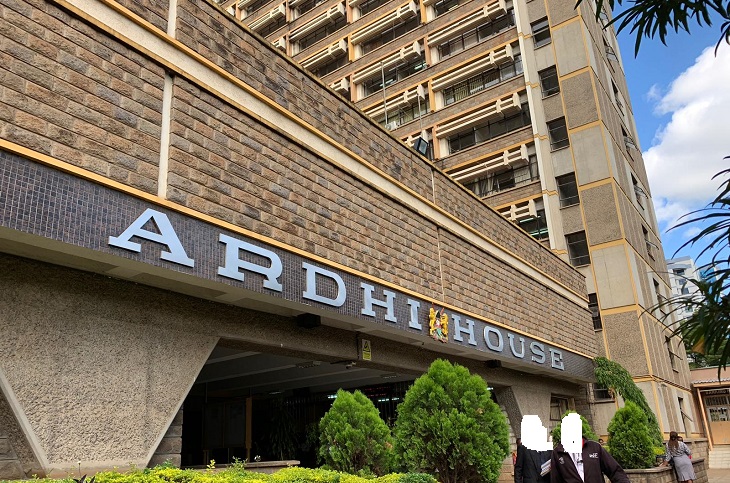

A blistering 50-page judgment by the Environment and Land Court has laid bare the depth of dysfunction, negligence, and suspected collusion within Kenya’s Ministry of Lands, branding the institution a “factory for duplicate titles” at the heart of a Sh1.19 billion fraud scheme in Nairobi’s high-end Loresho neighbourhood.
The ruling, delivered in early November 2025, brings to a close a bruising legal battle that spanned more than a decade and pitted four legitimate landowners against a private company that faked its way into claiming their property—and even leveraged it to secure a hefty bank loan.
The case involved three parcels of land—LR No. 21075, 21103, and 21104—each of which astonishingly had two separate titles issued years apart. The rightful owners, identified as Young Moon Choi, Bharat Ramnji, Allotrope Trust Company Limited, and Masai Roses Limited, had lawfully acquired their parcels, with some holding original deeds dating back to the 1990s.
Their nightmare began when they discovered that Goldstein Group Services Limited had acquired competing titles for the same plots, all curiously dated 2013, and had gone on to combine the three properties into a fraudulent new parcel: LR No. 29945.
A Web of Fraud, Concealment, and Bureaucratic Rot
The full extent of the scheme began to unravel in 2013, when one of the plaintiffs, businessman Bharat Ramnji, was tipped off by a real estate agent about a 14-acre property in Loresho being quietly marketed to investors.
Upon digging deeper, Ramnji was stunned to discover that the land up for sale included his own property—yet he had never sold or transferred it. What he uncovered was a brazen amalgamation of his parcel with those belonging to the other plaintiffs. This combined property, now fashioned into LR No. 29945 under the name of Goldstein Group, had also been used as collateral for a Sh62 million loan from Jamii Bora Bank.
But when the legitimate owners attempted the most basic step—carrying out an official land search—they hit a dead end. Ministry of Lands officials told them the files for their properties were “missing.” That revelation marked the beginning of a trail of bureaucratic failure and questionable actions that pointed to more than just incompetence.
In court, a Nairobi County planning officer testified that the crucial planning approval document, known as the PPA2 form, bore a forged signature. Survey documents that should have supported an amalgamation were instead stamped as “subdivision”—a mistake so fundamental and obvious that the judge suggested it could only have been overlooked through deliberate inattention or outright complicity. The Chief Land Registrar himself conceded that important records in the land registry had mysteriously “disappeared.”
The court’s assessment was scathing. In one pointed passage, the judge remarked: “Like a well-meaning but forgetful scribe, the Ministry of Lands appears to have rewritten its own story several times, bestowing ownership of land upon more than one deserving soul.” The court declared Goldstein Group’s titles fraudulent and illegal, nullified them entirely, and reinstated the original owners’ deeds.
A Symptom of Kenya’s Chronic Land Fraud Crisis
The Loresho case is not merely an isolated incident—it is emblematic of a much wider, deeply entrenched national problem. Land fraud has long plagued Kenya, draining billions from the economy and sowing distrust among property owners and investors. A 2021 Transparency International-Kenya report estimated that illegal land dealings cause losses of up to Sh8 billion annually. Much of this fraud relies on insider cooperation within land registries, where unscrupulous officers manipulate, forge, or conveniently “lose” records to benefit criminal networks.
Recognizing the gravity of the problem, the Ministry of Lands in April 2025 formed Multi-Agency Teams (MAT), combining the Directorate of Criminal Investigations (DCI) and the National Intelligence Service (NIS). These teams were tasked with dismantling entrenched cartels and sealing loopholes that have long enabled land-grabbing syndicates.
Yet scandals persist. In June 2025, the Ethics and Anti-Corruption Commission (EACC) recovered a 4.9-acre public property in Loresho valued at over Sh400 million. The land, originally set aside for a water reservoir, had been illegally carved up and allocated to individuals and firms. Another multi-billion-shilling dispute in the same neighbourhood involves a Sh1.3 billion property claimed by businessman Ashok Kumar Rupshi and former Provincial Commissioner Davis Nathan Chelogoi, who is facing charges of conspiracy to defraud.
The Stakes for Ordinary Kenyans
While the court’s decision offers long-awaited justice to the four Loresho victims, it simultaneously exposes the troubling vulnerability of every landowner in the country. Their struggle—exhausting, expensive, and spanning more than 10 years—highlights just how perilous it is to navigate Kenya’s land administration system, where even the most conscientious property owner can fall prey to sophisticated fraud.
The Ministry of Lands has embarked on digitization efforts in recent years, promising to modernize and secure records. But as the Loresho ruling makes clear, the problem runs far deeper than missing files or outdated systems. It is a systemic crisis requiring sweeping reforms, strict accountability, and airtight safeguards.
For now, Kenyan landowners must remain vigilant. In a country where a title deed is supposed to be the ultimate symbol of ownership and security, the Loresho case is an unsettling reminder that until the system is overhauled, even the most valuable assets can be stolen with a forged stamp, a missing file, and a few well-placed insiders.
Related Content: Nairobi’s Land Price Growth In Satellite Towns Slows To 0.84% In Q3 2025