
An electric scooter that charges from a household socket and promises savings of about KES 47,000 a year has arrived in Kenya. For the millions who fight their way into Nairobi, Mombasa and Kisumu every morning, the question is simple: does it change the commute?
Picture a young accountant who lives in Ruiru and works in Upper Hill. Her morning starts with a calculation, not coffee. Matatu fares rise when it rains, when fuel goes up, and when the stage tout senses urgency. A boda boda is faster but adds up quickly. A car means hours in traffic and a parking bill at the end of it.
Now picture a different morning. She unplugs a scooter that charged overnight from the same socket as her kettle. She rides past the stalled queue at the Pangani interchange, parks at the office, and spends nothing at a petrol station all week.
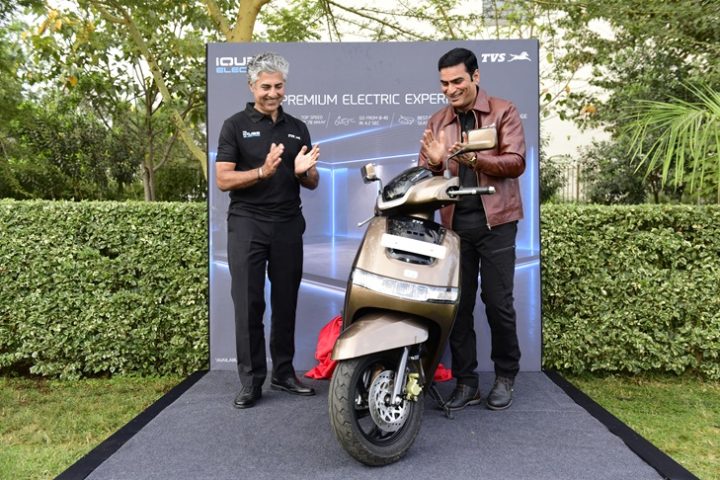
That is the promise behind the arrival of the TVS iQube electric scooter in Kenya. TVS Motor Company, now the world’s third-largest two-wheeler maker, has chosen Kenya as the iQube’s first African market. It is selling the scooter through Car & General dealerships. Whether the promise survives contact with Kenyan roads, wallets and power lines is the real story.
What has actually landed
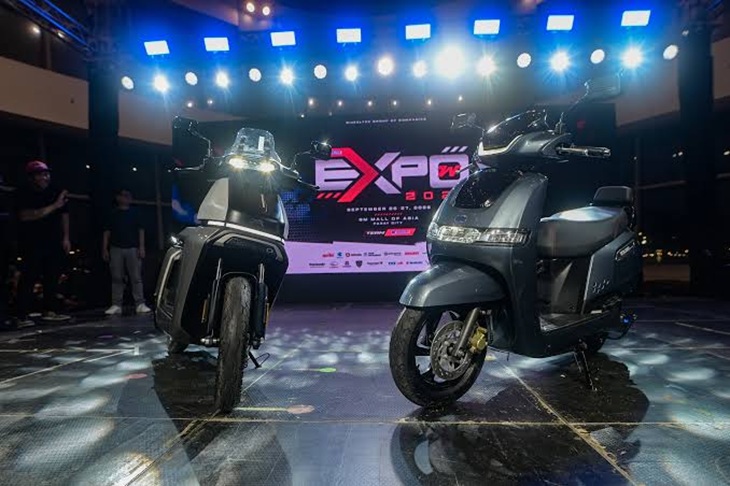
The iQube is a commuter scooter, not a performance machine, and it comes in two versions. One covers up to 75 km on a full charge and the other up to 115 km. Both charge from a standard household socket, with no special wall box required.
| What matters to a commuter | What TVS is offering |
|---|---|
| Range per charge | Up to 75 km or 115 km, depending on variant |
| Charging | Standard household socket |
| Estimated running-cost savings | About KES 47,000 a year vs a petrol scooter |
| Warranty | 2 years or 30,000 km |
| Where to buy and service | Car & General dealerships, with nationwide after-sales support |
| Global track record | More than 1 million riders, over 17.8 billion km covered |
The partnership matters as much as the product. Car & General has been selling and servicing two-wheelers in Kenya for decades, and its branch network reaches well beyond Nairobi. Its CEO, Vijay Gidoomal, says growing consumer demand, supportive policy and greater environmental awareness are creating favourable conditions for electric two-wheelers. TVS Kenya Associate Vice President Pradeep Chaurasiya calls the launch “a natural extension” of the company’s expansion into Africa.
One detail the launch announcement leaves out is the retail price. For most commuters that number will decide everything else, and it is the first question buyers should put to the dealer.
The money question
For most Kenyan commuters, transport is one of the biggest monthly bills after rent and food. That is why the headline figure in TVS’s pitch is not speed or style. It is the estimated KES 47,000 a year saved in running costs compared with a petrol scooter.
Broken down, that is roughly:
-
KES 3,900 a month, about the cost of a week’s groceries for a small household
-
KES 900 a week, or a good share of a typical week’s matatu fares on a busy route
-
KES 130 a day, the price of a short boda hop or a lunchtime chapati and beans
The saving comes from two places. Electricity bought from Kenya Power costs far less per kilometre than petrol at the pump. An electric motor also has far fewer moving parts than an engine, so there are no oil changes, spark plugs or clutch cables to replace.
The comparison TVS makes is with a petrol scooter, not with a matatu. A commuter switching from public transport will not “save” KES 47,000. They will swap fares for a purchase price, charging costs, insurance and the occasional service. Whether that adds up depends on the price of the scooter, the financing terms and how far they ride. For anyone already riding a petrol bike or scooter, the case is much more direct.
Range anxiety, Kenyan edition
The fear that stops many people buying an electric vehicle is running out of charge halfway home. For an urban commuter, the numbers suggest that fear is mostly misplaced.
A round trip from Ruiru to Upper Hill, or from Kitengela to the CBD, is roughly 50–70 km. The 115 km variant covers that with room to spare for errands, a detour to pick up a child from school, or a night of heavy traffic. The 75 km variant suits shorter runs: Westlands to Kilimani, Nyali to Mombasa island, or Kisumu’s suburbs to the town centre.
The household socket changes the routine more than the range does. There is no need to find a charging station, queue or pay a premium. The scooter charges overnight, the way a phone does. For riders who can also plug in at work, the battery is effectively topped up twice a day.
The catch is that charging at home assumes a home where you can charge. Many urban Kenyans live in flats several floors up, in plots with shared meters, or in informal settlements with irregular connections. For them, the practical questions are:
-
Where can the scooter be parked securely and plugged in overnight?
-
Will the landlord or caretaker allow it, and who pays the extra electricity?
-
Is there a charging or battery point near work or on the route?
These are not reasons to dismiss the iQube. But they will shape who adopts it first: commuters with secure parking and their own meter.
Who stands to gain
Kenya’s electric shift is already under way, and it is being led by two wheels. Ministry of Roads and Transport figures show cumulative EV registrations rose from 1,378 in 2022 to 39,324 in 2025, an increase of more than 2,700% in three years. Electric motorcycles serving the boda boda and last-mile segment are among the main drivers. The iQube enters that wave from a slightly different angle: the private commuter.
The salaried commuter. Clerks, nurses, teachers and young professionals who travel the same route every day get the most predictable benefit. A fixed route means a fixed charge, and a fixed charge means a fixed budget, free from fuel-price shocks and fare hikes.
Boda boda and delivery riders. For riders who cover long distances every day, fuel is the biggest cost after the bike itself. Every shilling not spent at the pump is take-home pay. A scooter format suits food and parcel delivery in dense neighbourhoods, though heavy passenger work on rough roads may still favour purpose-built electric motorcycles.
Women commuters. A step-through scooter with no gears and no clutch is easier to learn on than a conventional motorcycle. Riding your own vehicle also means less time waiting at stages after dark and less exposure to crowded matatus.
Small businesses. Pharmacies, caterers, courier start-ups and hardware shops that run errands across town can cut fleet costs. The 30,000 km warranty gives some cover for heavy use.
Car owners rethinking the daily drive. For a solo trip into town, a scooter avoids the jam and the parking fee. Some households may keep the car for weekends and family trips and use the scooter for the weekday commute.
Cleaner air, quieter streets, and a grid that is paying attention
Anyone who has waited at a Nairobi bus stop knows the taste of exhaust. Two-stroke and poorly tuned four-stroke engines are a large part of the city’s noise and roadside fumes. Every commuter who switches to electric takes one tailpipe off the road. Because most of Kenya’s electricity comes from geothermal, hydro and wind, the power that charges an iQube is also comparatively clean at source.
Policy is starting to push in the same direction. Kenya is developing a National Electric Mobility Strategy to coordinate the transition. Electric motorcycles, electric bicycles, lithium-ion batteries and electric buses are currently zero-rated for VAT, and there are measures supporting local EV assembly and component imports.
Kenya Power is watching closely, because e-mobility is fast becoming a paying customer. Cumulative revenue from EV charging reached KES 382 million between July 2023 and April 2026. Monthly revenue climbed from KES 873,907 in July 2023 to a peak of KES 35.25 million in February 2026. Nairobi dominates:
| Region | EV charging revenue, Jul 2023 – Apr 2026 (KES) |
|---|---|
| Nairobi | 271.9 million |
| Coast | 55 million |
| North Eastern | 35 million |
| West Kenya | 11.5 million |
The utility projects that electricity sales to e-mobility could reach KES 5.9 billion by 2030. For commuters, that matters: a utility that earns from EVs has a reason to invest in charging points and more reliable supply.
The bumps in the road
A good launch does not guarantee a smooth ride. Several practical hurdles will decide how fast scooters like the iQube spread beyond early adopters.
Upfront cost and financing. Electric two-wheelers usually cost more to buy than petrol equivalents, even when they are cheaper to run. Most Kenyan commuters buy on credit, through chamas, SACCOs or asset financiers. Affordable, flexible financing, including weekly or daily repayment plans that mirror boda boda economics, will matter as much as the VAT exemption.
Power reliability. Outages are still a fact of life in parts of every Kenyan city. A rider who forgets to charge before a blackout may have to fall back on a matatu. Charging at work, or at public points with backup power, gives a buffer.
Safety and road design. Two-wheelers are among the most vulnerable road users in Kenya. An electric scooter is quiet, which pedestrians and other drivers may not expect. Helmets, reflective gear, rider training and proper licensing matter as much as the motor. Dedicated lanes for two-wheelers and non-motorised transport remain rare.
After-sales and battery life. The two-year or 30,000 km warranty and nationwide support from Car & General address a common fear: being stranded with a bike nobody can repair. Buyers should still ask what the battery warranty covers, how much a replacement costs, and how the battery copes with heat and rough roads over time.
Resale and trust. The second-hand market for electric scooters in Kenya is young. Until buyers can judge a used battery’s health, resale values will be uncertain.
Tomorrow’s commute
The iQube will not empty Thika Road or retire the matatu. Kenya’s cities will keep running on shared transport, and they should. What the launch does is give a growing group of commuters a credible third option between the crowded matatu and the costly car. That option is personal, predictable and cheap to run.
The broader signal may matter even more. When one of the world’s largest two-wheeler makers picks Kenya as its first African market, it says the country’s EV market has moved past pilot projects. Registrations are climbing, Kenya Power is planning for billions in e-mobility sales, and policy is lining up behind the shift.
For the commuter in Ruiru, the test is practical. Can she buy it on terms she can afford? Can she charge it where she lives? Will it be fixed quickly when something goes wrong? If the answers are yes, her morning calculation changes for good, and so might the sound of the city around her.
Related Content: Riding Into the Future: My Take on the TVS iQube in Kenya