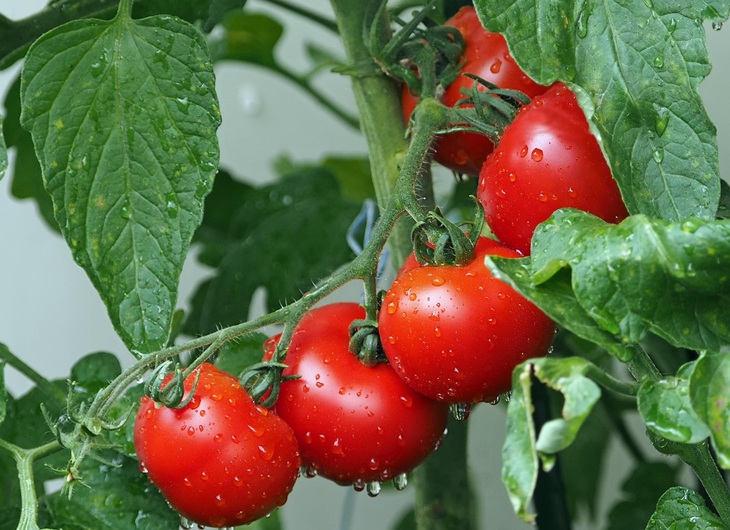

Tomato farming in Kenya is often called “growing red gold,” and for good reason. When a harvest hits the market at the right time, the returns can be life changing. However, any seasoned farmer will tell you that tomatoes are a demanding crop. They require precise management, the right genetics, and a proactive approach to protection.
At Syngenta Vegetable Seeds Kenya, we have spent years developing hybrids and protection programmes specifically suited to our local soils and climate. If you want a crop that doesn’t just grow but thrives and pays, you need a solid plan.
Here is how you can manage and protect your tomatoes for maximum yield.
Start with the Right Genetics
Everything starts with the seed. You could have the best fertiliser and the most expensive irrigation system in the world, but if your seeds lack the inherent strength to fight off local diseases, you are fighting a losing battle.
Here are some of Syngenta’s tomato varieties you can start with:
- Kilele F1 – An Open-Field Powerhouse
If you are growing in the open field, Kilele F1 is likely your best bet. It is a determinate variety, meaning it grows to a certain height and then produces its fruit all at once.
What makes it a favourite in Kenya is its tolerance to Tomato Yellow Leaf Curl Virus (TYLCV) and Nematodes. It’s a vigorous plant with firm, elongated fruits that handle transport well.
- Tylka F1 – Your Greenhouse Choice
For those using greenhouses or staking their plants outdoors, Tylka F1 is an indeterminate hybrid. This means it continues to grow and produce fruit over a long period.
It is famous for its oval-shaped, very firm fruits and an impressive shelf life of up to 21 days. If your market is far away, Tylka F1 ensures your produce arrives in perfect condition.
- Rafano F1 – If Wilting Has Been Your Problem
Bacterial Wilt is the nightmare of many Kenyan farmers. Rafano F1 was bred to stand up to this challenge.
It offers high tolerance to both Bacterial Wilt and TYLCV, making it a reliable choice for regions where these issues usually wipe out entire crops.
- Alston F1 and Stony F1
Alston F1 is our go-to plum tomato, also boasting high Bacterial Wilt tolerance. Meanwhile, Stony F1 is known for its incredible vigour and square-round fruits. It produces heavy clusters, often with 5 to 7 fruits per cluster, giving you the weight you need at the scales.
The Nursery is Where It All Begins
You cannot rush the nursery phase. A weak seedling will never become a high-yielding plant.
When sowing your Syngenta Vegetable Seeds Kenya Seeds, aim for a depth of 8mm.
- If you are using a seedbed, you will need roughly 250g of seed per hectare. For those direct-sowing (though we recommend a nursery for better control), the rate is 4kg per hectare.
- Keep your sowing lines 10cm apart, with about 2cm between each seed. This spacing ensures that when the seedlings emerge, they aren’t competing for light and air. Airflow is your first line of defence against early-stage fungal issues.
Your seedlings should stay in the nursery for 4 to 5 weeks. By the time they are 7.5cm to 10cm tall, they are ready for the big move to the field.
Transplanting and Field Management
Spacing is not just about fitting as many plants as possible onto your land; it is about giving each plant the room it needs to breathe and feed.
- For greenhouse production, we recommend a spacing of 60cm by 45cm.
- If you are planting in the open field, give them a bit more room at 60cm by 60cm.
This extra space in the open field helps reduce the spread of pests and allows you to move through the rows for spraying and harvesting without damaging the plants.
Pro Tip: When you transplant, do it in the late afternoon or on a cloudy day to reduce transplant shock. The sun can be brutal for a young plant whose roots have just been disturbed.
Watering and Feeding Your Crop
Tomatoes are thirsty plants, but they hate “wet feet.” In the first two weeks after transplanting, provide about 3 to 4mm of water daily. As the plants grow and start flowering, this should increase to 5 or 6mm.
Consistency is the secret here. If you let the soil dry out completely and then flood it, you risk “blossom end rot”—those ugly black patches on the bottom of your fruit. This is often caused by a calcium deficiency triggered by uneven watering.
Feeding Your Crop Properly
Tomatoes remove nutrients from your soil with every kilogramme of fruit. If you want 30 – 35 tonnes per acre, you need to replace what you’re taking out.
Here are some calculations to help you get started:
- For every tonne of tomatoes you want per acre, you need 1.7kg of nitrogen, 1.9kg of phosphorus (P₂O₅), and 3kg of potassium (K₂O).
- Target yield of 60 tonnes? That’s 102kg nitrogen, 114kg phosphorus, and 180kg potassium per acre.
- If you apply 5 tonnes of well-rotted manure per acre before planting, reduce these numbers by 20%.
- Apply half your total NPK requirement at transplanting. The remaining half comes as top dressing 3-4 weeks later. Don’t dump it all at once – split applications mean less waste and better uptake.
Calcium prevents blossom end rot, those black sunken spots on fruit ends. Apply 100-200kg of calcium per acre, depending on your soil pH. Lower pH needs more calcium. Test your soil if you can; it’s cheaper than guessing wrong.
Greenhouse farmers using fertigation can apply small amounts of nutrients daily through drip irrigation. This gives you more control and typically better results than broadcasting fertiliser every few weeks.
Protecting Your Investment from Pests and Disease
Even with the best seeds, pests and diseases will come knocking. The key is to be proactive rather than reactive.
Managing the “Big Three” Diseases
- Late Blight: This can destroy a field in days during cool, wet weather. Look for dark, water-soaked patches on leaves.
- Tomato Yellow Leaf Curl Virus (TYLCV): Carried by whiteflies, this virus causes leaves to curl and turn yellow, stunting the plant entirely. Choosing resistant varieties like Kilele F1 or Rafano F1 is a good way to start and following the ideal tomato farming practices.
- Bacterial Wilt: This causes the plant to suddenly limp and die while still green. Soil hygiene and resistant varieties like Alston F1 go a long way in helping you earn in the end.
Pest Control
Whiteflies, Thrips, and Cutworms are your primary enemies. Whiteflies are especially dangerous because they carry viruses. We recommend starting your spray program in the nursery. Using a product like Syngenta’s Actara early on provides a systemic shield.
For later stages, Miravis Duo is an excellent choice for managing both Early Blight and Powdery Mildew, ensuring your foliage remains healthy enough to support heavy fruit production.
Harvesting for the Market
A tomato is only profitable if it makes it to the buyer in good shape. Because Syngenta Vegatbles Kenya hybrids like Stony F1, Tylka F1 and Kilele F1 are bred for firmness, they have a natural advantage.
Harvest your fruits when they reach the “breaker” stage—when the first tint of pink or orange appears. This allows them to ripen during transport without becoming mushy.
Remember, a firm fruit with a long shelf life gives you more bargaining power with buyers. You aren’t forced to sell at a low price just because your crop is about to spoil.
Tomato farming is a journey that requires attention to detail every single day. By choosing high-quality Syngenta hybrids, following the right spacing and nursery protocols, and staying ahead of pests, you set yourself up for a successful season.
Also, try a different variety, and not the same one you’ve always planted, just because it’s familiar. Match your variety to your conditions.
Meanwhile, download the My Seeds Syngenta app on the Google Play Store and iOS App Store. It’s free and has pest identification guides, growing recommendations, and contact details for technical support. You’re not farming alone – Syngenta Vegetable Seeds Kenya technical representatives provide field support at no extra cost.
Visit your nearest Syngenta stockist this week. Ask about these varieties specifically, get the technical data sheets, and talk to our agronomists about your specific farm conditions.
Your next harvest can be your best one. It starts with the seed you choose today.
Read Also: Tomatoes Have Become Hotcake in Nairobi As Prices Increase