
The Kenya Revenue Authority has launched an intensive immersion program for Kenyan journalists aimed at enhancing media understanding of customs operations, trade facilitation, and revenue administration in the country.
The initiative seeks to equip members of the fourth estate with factual knowledge and technical insights that will strengthen accurate reporting on customs, taxation, and international trade matters.
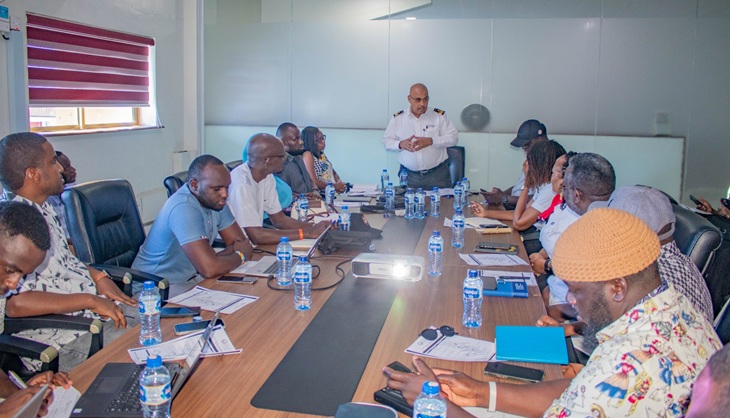
Held in Mombasa, the program brought together journalists from different media houses for a hands-on engagement with KRA officials, customs experts, and digital systems managers. The first day of the immersion focused on helping journalists understand the critical role customs plays in facilitating trade, protecting borders, and supporting economic growth.
Opening the session, Swalleh Faraj, Ag. Deputy Commissioner, Customs and Border Control, Southern Region, took journalists through an overview of KRA Customs operations, mandate, and strategic role within Kenya’s economy. He explained that customs administration today goes beyond tax collection and is increasingly becoming a vital pillar in global trade facilitation, regional integration, and national security.
Faraj noted that the customs department plays a central role in enabling the smooth movement of goods while ensuring compliance with both local and international trade regulations.
“Customs is not just about collecting taxes at the ports or borders. It is about facilitating legitimate trade, securing the country from harmful imports, and supporting economic development,” said Faraj. “Our objective is to create an environment where compliant traders can move goods seamlessly while maintaining the integrity of our borders and revenue systems,” he added.
He added that the authority has continued investing heavily in modernization and digital transformation to reduce cargo clearance timelines and improve efficiency at entry points.
The journalists were also taken through various customs digital systems by Tabitha Wanyama, Manager, Customs Warehouse, Customs and Border Control, Southern Region. Her presentation focused on how technology has transformed customs management and trade facilitation processes in Kenya.
Wanyama explained how automation and integrated customs systems have significantly reduced paperwork, enhanced transparency, minimized human interaction, and improved accountability within customs operations.
“Digital systems are helping us improve efficiency, enhance compliance, and reduce opportunities for corruption and delays,” she said.
She further noted that technological integration has enabled faster verification processes, real-time cargo monitoring, and improved coordination among government agencies involved in trade facilitation.
According to Wanyama, KRA continues to align its customs operations with global best practices and regional standards to position Kenya as a competitive trade and logistics hub within East Africa.
The immersion program also highlighted the importance of responsible and factual journalism in reporting matters touching on taxation, customs, and trade. Andrew Osiany, Chief Manager, PR & Communications at KRA, challenged journalists to prioritize accuracy, verification, and contextual understanding when covering revenue-related stories.
Osiany emphasized that misinformation and incomplete reporting on customs matters can easily create unnecessary public anxiety, distort facts, and undermine public trust in institutions.
“The media plays a critical role in shaping public understanding. That responsibility comes with the need to tell factual stories backed by proof and a proper understanding of the issues,” said Osiany.
He added that KRA remains committed to maintaining open engagement with the media to ensure journalists have access to accurate information and technical clarification whenever necessary.
“Taxation and customs are highly technical subjects. Through engagements like these, we want journalists to appreciate the processes, challenges, reforms, and the realities behind customs operations so that reporting is balanced and informative,” he said.
The immersion program comes at a time when Kenya is intensifying efforts to improve trade efficiency, boost revenue collection, and strengthen border controls amid increasing regional and international trade activity through the Port of Mombasa and other entry points.
The program is expected to continue with additional sessions covering cargo clearance processes, border management, customs enforcement, trade facilitation reforms, and field visits to key operational areas within the Port of Mombasa.
Related Content: KRA’s New iTax Changes Could Save Kenyan Businesses Time and Money