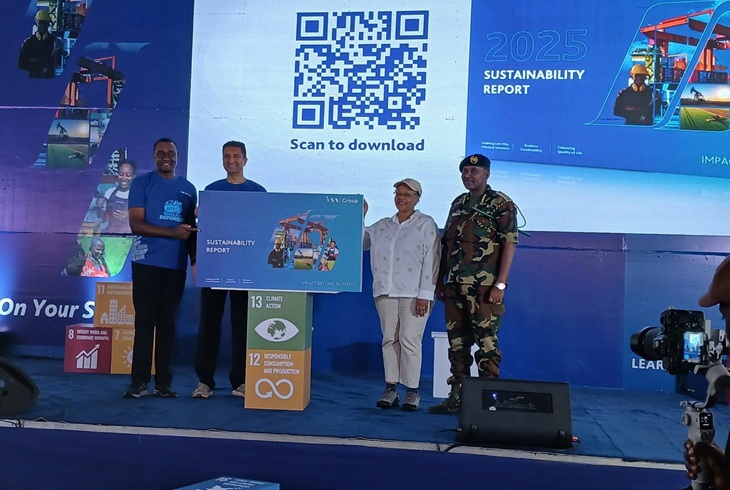

There’s a version of corporate sustainability that lives in a glossy annual report, gets read once a year, and has almost nothing to do with how a business actually makes decisions. Then there’s the other version, the one where sustainability shows up in lending criteria, board committees, procurement contracts, and staff performance metrics.
I&M Group is making a clear case for the second version. Its 2025 Sustainability Report, “Impact Beyond Numbers,” reads less like a compliance exercise and more like a strategy document, one where doing right by customers, employees, and communities is treated as core to the business, not an accessory to it.
Sustainability with a Seat at the Table
You can tell a lot about how seriously a company takes sustainability by looking at its governance structure, and I&M’s is telling. Sitting alongside the Board Audit & Risk Management Committee, the Nomination and Governance Committee, and the Strategy Steering Committee is a dedicated Board Sustainability Committee. That’s not window dressing; it means sustainability questions get the same structural weight as risk and strategy, debated by the same board that oversees the balance sheet. The Group has also grown its board to 10 directors (up from 9 in 2024), maintained a 67:33 gender diversity ratio, and kept independent representation at 56%, a level the Group frames as protecting minority shareholders and keeping decision-making honest.
This governance backbone matters because it’s what turns good intentions into a repeatable system. Since 2023, I&M has become a signatory to the UN Global Compact, formalized a Group-wide Sustainability Action Plan, and in 2025 signed on to the UNEP Financial Institutions’ Principles of Responsible Banking along with the UNGC’s Forward Faster Commitments. Each step has built toward a headline ambition: positively impacting more than 50 million lives by 2030.
Three Pillars, One Business Logic
I&M organizes its strategy around three pillars, and what stands out is how commercially grounded each one is.
Enabling Last Mile Financial Solutions is essentially about closing the gap between capital and the people who need it most: smallholder farmers, micro and small enterprises, and underserved entrepreneurs across East Africa.
The numbers back up the intent: financing through digital lending nearly doubled year-on-year to KES 20.6 billion, MSME financing grew from KES 13 billion to KES 18.3 billion, and green finance contracts rose to KES 3.7 billion.
Strategic partnerships expanded from 11 to 13. This is a bank using its regional footprint and digital platforms to push capital toward people traditional finance often overlooks — and it’s good business, not just good citizenship, since it grows the customer base (up 33% in 2025) while deepening digital engagement (86% of customers now digitally active).
Building a Sustainable Business turns the lens inward. Per-employee energy consumption dropped from 2.0 to 1.6 MWh, water use fell, and 98% of waste was recycled. Gender balance across the workforce sits at an even 50:50, and women now hold 43% of senior leadership roles, up from 40%. Procurement decisions are being tilted toward local suppliers (87% of contracts) and local SMEs (61%), with contracts to special groups more than doubling to 8%. None of this is accidental — it reflects deliberate embedding of ESG considerations into everyday operating decisions, from how offices are run to who gets awarded a supply contract.
Enhancing Quality of Life is where the I&M Foundation and subsidiary-level community programs do their work. In 2025 alone, more than 300,000 people were reached through community investment, over 38,000 women and youth were economically empowered, 440 scholarships were awarded, and over a million trees were planted. Nearly KES 290 million was channeled into ecosystem restoration and economic empowerment initiatives combined.
Put together, these pillars total more than 10 million lives impacted in 2025 alone — a meaningful marker on the road to the 2030 target. But the more interesting story is the mechanism: sustainability isn’t a side fund at I&M; it’s stitched into lending books, procurement policy, workforce planning, and board oversight simultaneously. External recognition, from “Best Bank in Sustainable Corporate Social Responsibility” in Kenya to a Gold Gender Equality Certification in Rwanda, suggests the market is noticing.
Looking ahead, I&M has flagged four priorities: tightening ESG integration into risk management, advancing climate and nature-related work including blue carbon investments, deepening financial inclusion, and improving transparency in reporting. None of these are small commitments, and they will require sustained discipline as regulatory expectations across East African markets continue to evolve.
What I&M’s report ultimately argues is that sustainability and business performance aren’t competing priorities to be balanced, they’re the same project, viewed from different angles. Whether that holds up as ambitions scale toward 2030 will be worth watching. But the infrastructure, board oversight, measurable targets, cross-market consistency — is already in place to make it more than a slogan.
Related Content: I&M Bank Launches Mastercard World Elite Metal Card in Kenya