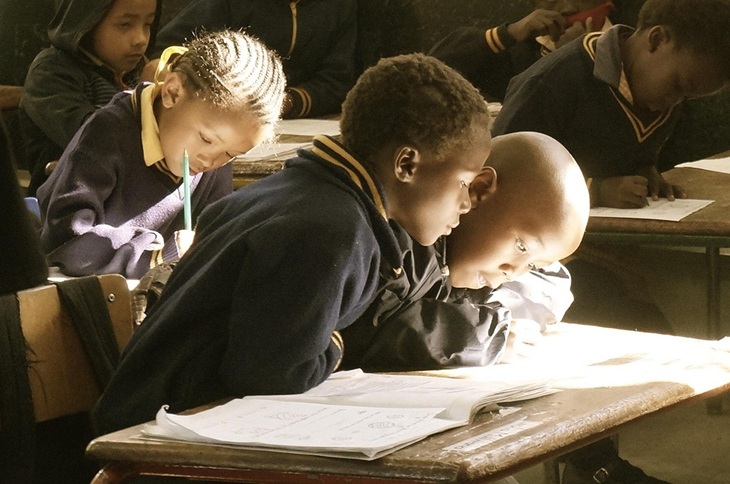

Kenya has made significant progress in school enrolment, particularly at the primary level. However, access to education does not automatically translate into better learning outcomes.
Learning tools, like a simple pen or pencil, may seem insignificant in the broader conversation of education equity. But for a child without one, participation in class and the confidence to learn are all but compromised.
Access to basic stationery is about dignity and inclusion. A child who cannot write is less likely to ask questions, participate in class or complete homework. Over time, this affects performance and retention, particularly for learners already facing an economic or social disadvantage.
Unfortunately, the gap in access to basic learning materials remains stark.
While some students returned to well-resourced classrooms this back-to-school season, many others are having to share pens, ration exercise books or go without them entirely. Such disparities undermine efforts to achieve inclusive and equitable quality education and perpetuate cycles of inequality that leave too many children behind.
The consequences are reflected in what the World Bank terms learning poverty, a child’s inability to read and understand a simple text by age 10. The World Bank’s report on Learning Poverty in Kenya (April 2024) revealed a sobering truth: nearly eight out of ten children, or 79%, are unable to read and understand a short, age-appropriate text by age 10, even when enrolled.
However, learning poverty is not driven by attendance alone. It is shaped by classroom conditions, teacher support and access to basic learning materials. When students cannot write, practise or revise because they lack pens or exercise books, learning gaps widen quickly and persist over time.
Crucially, these early learning gaps are hardest to reverse. When foundational skills such as writing and reading are not firmly established early, later investments become less effective and more costly. Addressing access to basic learning tools at the start of a child’s education is therefore not a marginal intervention, but one of the most efficient ways to protect long-term learning outcomes.
Without decisive collective action, education will continue to reproduce inequality rather than reduce it.
This is why the Back-to-School season we just witnessed should be reframed not only as a retail or logistical moment, but as an opportunity for collective responsibility. Parents, communities, policymakers and the private sector all have a role to play in closing access gaps, however small they may appear.
The International Day of Education, which was marked on 24th January, reminded us that education is a human right, a public good and a public responsibility.
Every day, writing tools play a critical role beyond their basic function. They enable learning, creativity, and confidence, especially in classrooms where access to basic materials is not guaranteed.
Equity in education won’t be built through policy only. We must ensure that every learner has what they need to engage meaningfully in the classroom. Through initiatives such as Buy One, BIC Will Donate a Pen, the private sector can help place pens in the hands of children who need them most. It is a simple model that directly supports education access.
Such efforts go beyond charity. They reflect an understanding that sustainable progress in education depends on partnerships between public institutions, communities, and responsible businesses. When commercial activity is aligned with social impact, it becomes possible to support education access at scale and contribute meaningfully to long-term learning outcomes.
As Kenya continues to invest in education as a cornerstone of development, we must remember that transformation is built from the ground up. Sometimes, it starts with something as simple and as powerful as access to a pen.
Let us choose to see education equity not as an abstract ideal, but as a shared responsibility we can all act on. Education equity begins when every learner can write, draw, and express their ideas.
Related Content: Kenya China Chamber Deepens Education and Climate Action Push at Kibera Primary School

Paloma Lengema is the General Manager for BIC East Africa