
When Dr George Ngondi set out to build a genomics laboratory capable of undertaking high-throughput genetic sequencing in Kenya, he knew the science would be demanding. What he did not anticipate, however, was how difficult it would be to secure the financing needed to bring the technology into the country.
Ngondi, a microbiologist and genomics expert, is the founder and Director of Nextgen Molecular Lab, a specialized laboratory that undertakes molecular and genomic testing to help diagnose and better understand diseases through analysis of genetic material.
To build the laboratory’s advanced sequencing capability, Ngondi needed about US$3.5 million, equivalent to approximately KSh454 million. The search for financing proved to be one of the biggest hurdles.
“We approached many banks, and everywhere we went, we faced a lot of challenges. So, we had to go for debt financing, and debt financing was a bigger challenge,” said Ngondi.
The investment was not limited to the genetic sequencer. Before acquiring the main equipment, Ngondi had already invested more than KSh100 million in supporting infrastructure and laboratory equipment, including a negative-pressure room for DNA isolation, PCR machines, quality-control analyzers and equipment used in library preparation.
The additional investment meant that the laboratory had already put significant capital into establishing the specialized facility and creating the infrastructure required to operate an advanced sequencing platform.
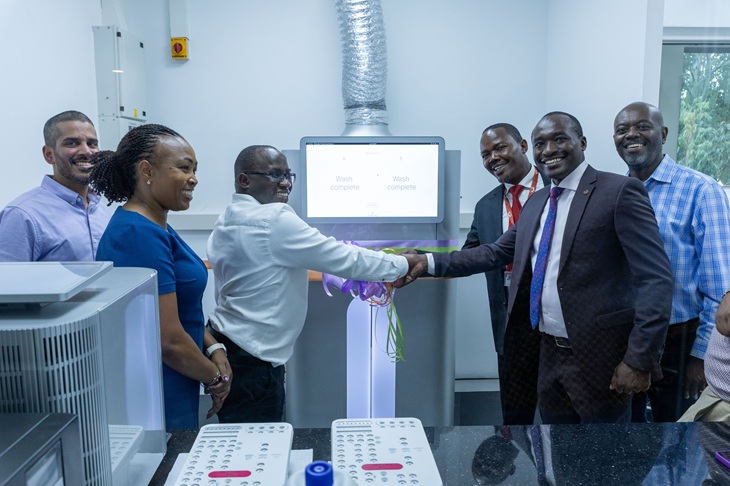
At the center of the investment was the NovaSeq™ System, an ultra-high-throughput Next-Generation Sequencing platform capable of processing large volumes of genetic material simultaneously. For a laboratory, the machine is more than another piece of equipment. It is where much of the genomic sequencing work happens.
Think of a sample brought into the facility, such as blood or other biological material. It contains genetic information that cannot be seen with the naked eye. The NovaSeq™ System reads this genetic information at a very large scale, helping scientists identify and study changes in DNA that may be linked to disease or drug resistance.
This means that when a human sample enters the laboratory, the machine becomes part of the process that turns that sample into useful genetic information.
Why does that matter in medicine? Genetic information can provide clues about disease and how it affects individuals. By reading large amounts of DNA, genomic sequencing can help researchers identify genetic changes associated with certain diseases, understand how diseases develop and support research into how patients may respond differently to medicines.
For a laboratory, the system also provides the capacity to process large volumes of genetic material in one place. The information generated can support disease research, clinical investigations and the growing field of precision medicine, where treatment decisions are informed by the biological characteristics of individual patients.
Acquiring the equipment came with a multimillion-dollar price tag. The laboratory also needed specialized spaces, installation and supporting infrastructure to operate it properly. Securing financing of that magnitude therefore remained a significant hurdle. The breakthrough came when Equity Bank structured the financing around the genetic sequencer itself.
“The instrument was used as collateral. We did not have to give a title deed as collateral, and we are talking about a total of US$3.5 million,” said Ngondi.
The financing was further supported by safeguards for the specialised equipment. Illumina, the supplier of the sequencing system, provided a warranty and service contract, helping to mitigate equipment-related risks. This enabled Nextgen Molecular Lab to acquire the NovaSeq™ System, described as the only one of its kind in East and Central Africa.
The system significantly enhances the region’s capacity to conduct high-throughput genomic sequencing locally, strengthening access to advanced genomic research and precision medicine.
Today, the scale of the operation is beginning to take shape, with Nextgen in the process of engaging large-scale projects involving hospitals, research institutions and patient populations.
“What I tell people is that you are your DNA, and your DNA is you. So, if you know your DNA, you know your blueprint,” said Ngondi.
The ambition is to translate this knowledge into better healthcare by helping researchers and clinicians understand how diseases affect individuals and why patients may respond differently to medicines.
“Trust me, we need to know ourselves so that we can make better decisions, more informed decisions, and have more precision when it comes to the medications we choose,” he said.
For many healthcare businesses, the cost of specialized equipment can become a barrier to introducing services or increasing capacity, particularly where the equipment is expensive and highly specialized.
Diagnostic laboratories, imaging centers, dialysis units, dental and optical clinics, and specialized oncology and cardiology facilities require significant capital to acquire equipment and expand their services.
Dr Joseph Mbai EBS, General Manager and Team Leader for Health Sector at Equity Bank Kenya, said access to appropriate financing can help healthcare providers acquire equipment they would otherwise struggle to afford.
“Healthcare providers need access to the right equipment to offer quality services. When financing constraints prevent them from acquiring that equipment, it ultimately limits the services they can provide. Our role as Equity Bank is to help bridge that gap by making it possible for healthcare providers such as Nextgen Molecular Lab to invest in the equipment they need without looking for traditional collateral such as a title deed,” said Mbai.
For Ngondi, the journey from struggling to raise capital to operating one of the region’s most advanced sequencing platforms demonstrates the importance of matching financing structures to the assets and business model of a specialized enterprise. The machine may be the visible outcome of the investment. But behind it is a much bigger bet: that advanced genomic technology can be built, financed and operated locally, expanding the country’s capacity to understand disease and support more precise healthcare in the future.
Related Content: Only Science Will Save Kenyan Smokers On What Awaits Them