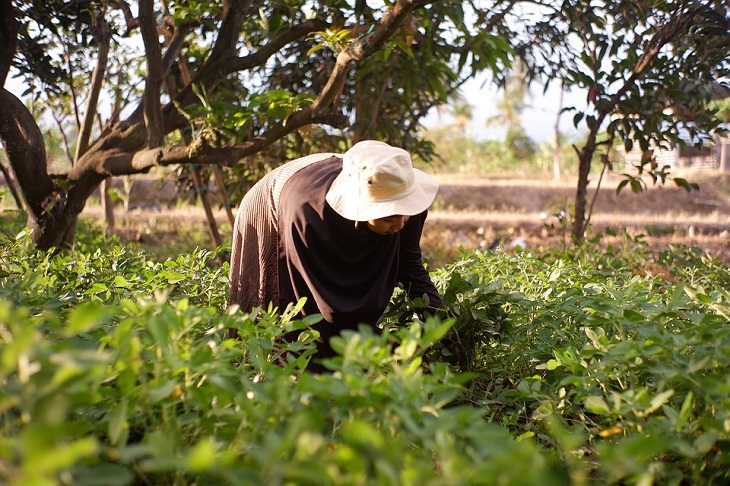

Kenya has become masterful at celebrating MSME resilience. Our media, both traditional and digital, are awash with stories of MSME owners rising above their challenges to succeed. Small wonder, considering small businesses are the backbone of our economy, yet so many of them face nearly insurmountable barriers to their success.
The Kenya National Bureau of Statistics estimates that 7.4 million MSMEs are operating across the country, employing roughly 14.4 million people. That is a significant number of livelihoods that hinge on the success of these small businesses. Yet, one in five of these businesses will fail within their first year, and only one in three survives beyond their tenth birthday.
Celebrating MSME success in the face of such numbers is celebrating survival against nearly impossible odds. We are celebrating business owners who work around broken systems without asking how we can fix them.
Systemic interventions removing the barriers to business can have a significant impact on economies. Changing systems means critically reviewing what we have been doing and fundamentally altering how different parts of the environment interact. It is about reworking the business ecosystems to ensure that more MSMEs not only survive but thrive.
Consider the financing deficit for Kenyan MSMEs, for example. A World Bank report indicates that there is a gap in excess of KES. 2.6 trillion. This is despite the KES. 150 billion MSME support pledged by the Kenya Bankers’ Association (KBA). While significant, it is a drop in the ocean of MSME financing needs.
On the other hand, there are more than 45 million active mobile money accounts, indicating fertile ground for the growth of devolved finance backed by a robust digital banking system. Yet, only a few players have recognized this market gap, and even fewer are practicing transparent and fair access to financing for MSMEs. Instead, the digital credit space is littered with predatory lending practices and unsustainable interest rates. This unfortunate situation highlights a disconnect between parts of the ecosystem that could help address a major challenge.
The same pattern emerges in market access. A 2024 Geo Poll survey of MSME owners found that at least 24.68% them were actively pursuing market opportunities within the African Continental Free Trade Area (AfCFTA), yet the main challenge they face is a lack of market information.
In the case of government procurement, a significant driver of business in the country, there are systemic issues, including unpaid bills, opaque procurement processes, and other structural challenges that make it impossible for MSMEs with tight balance sheets to compete.
Furthermore, firms with superior bargaining power delay payments, impose unfair contract terms, and transfer costs to small suppliers. These challenges represent a systemic extraction that no amount of training or individual brilliance on the part of the business owner can overcome.
There are similar issues that present when looking at licensing. Out of the 7.4 million MSMEs in the country, only 1.6 million are fully licensed, leaving 5.8 million that operate in the grey area. One of the key barriers to licensing and registration is the complex and multi-step registration framework. Simplifying it requires careful review of the process, with an ecosystem-wide look at each government function required for full registration.
Unfortunately, the most innovative MSME support initiatives in Kenya are mostly fragmented. They might help a business access financing, but not support market access, so the credit goes to waste as dead stock or loan repayments. Some businesses are assisted with training, but not with the capacity and technology to scale.
Development and overhauling of business ecosystems may seem expansive or complex, but the potential returns outweigh any perceived costs. Instead of an endless cycle of training programs, loan funds, and limited incubators, an ecosystems approach has the opportunity to completely change how MSMEs operate and thrive in the country.
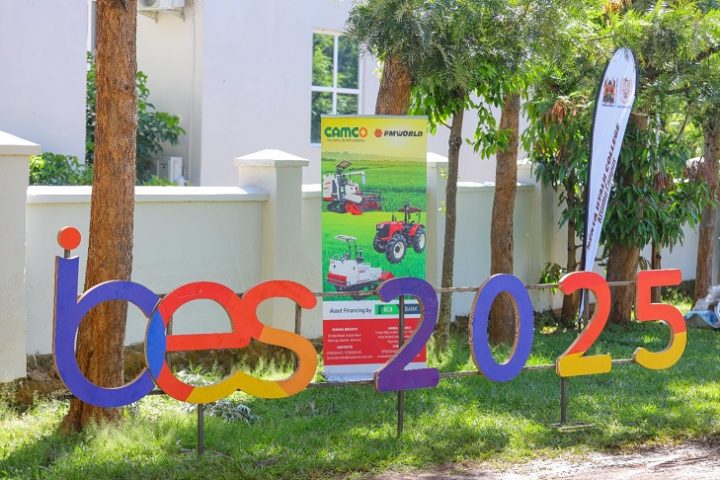
Conversations such as those that will be held at the second Business Ecosystems Summit in Kisumu on 26-28 November will bring together multiple players to chart a way forward in delivering ecosystem change for the benefit of Kenyan MSMEs.
MSMEs, the quiet giant of Kenya’s economy, have proven their resilience a thousand times over. Now it is time we built an ecosystem to support the great entrepreneurs.
Related Content: Safaricom’s M-Pesa: How the Tunaweza PWD Group Is Empowering Women With Disabilities Through MSMEs in Mombasa
Richard is the Managing Director of The IMC People, organisers of the Business Ecosystems Summit.